

This is the moment when
infrastructure capital matters most.
The Biohub is at the stage where capital shapes direction. Research institutions are integrating. Pharma partners are deploying. Builders are developing on the infrastructure. The network is forming and the entry window remains open.
Request a Discovery Call
Healthcare is entering its infrastructure era
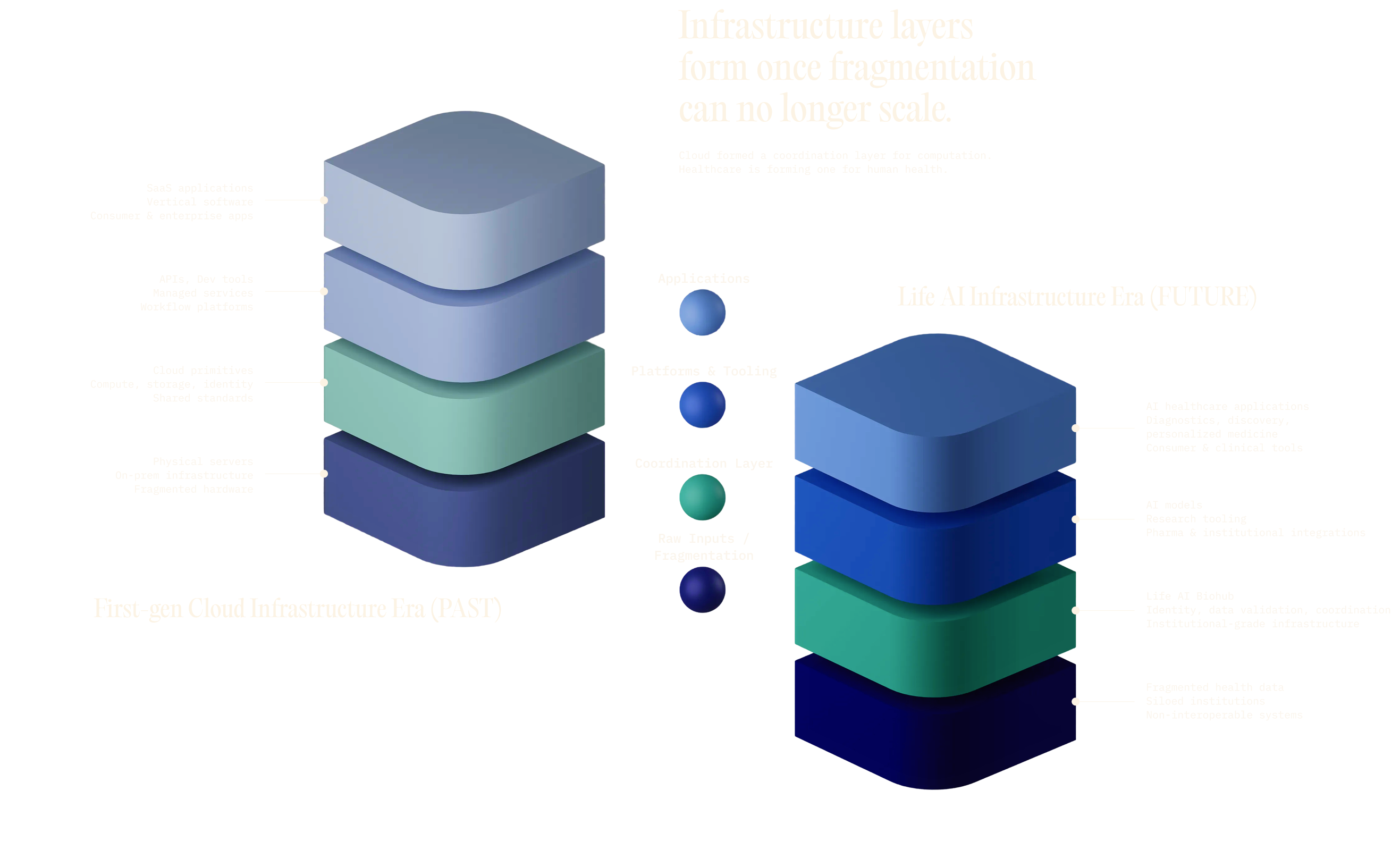
AI is moving from experimentation into regulated, institutional deployment. That shift changes the problem.
There is a need for coordinating the systems that models depend on: validated inputs, trusted identity, interoperable research, and real-world deployment pathways.
How Life AI Wins
The coordination layer the
ecosystem can't scale without.
Network effects that compound
Every new participant increases the value of the whole system. Each research partner, pharma collaboration, and builder integration deepens the network to increase data utility, improve coordination, and accelerate outcomes that fragmented systems can't replicate.
Architectural defensibility
Integration complexity becomes the moat.
Real-world health dynamics, validated identity, and institutional-grade infrastructure create compounding defensibility. Once the coordination layer is established, late entrants can't recreate the depth of integrations, ecosystem trust, or network density.
Category ownership
Infrastructure layers define categories. Applications compete on top. Cloud platforms formed in the 2000s. Data infrastructure consolidated in the 2010s. Healthcare's coordination layer is forming now and the firms that back formation early help define the category.
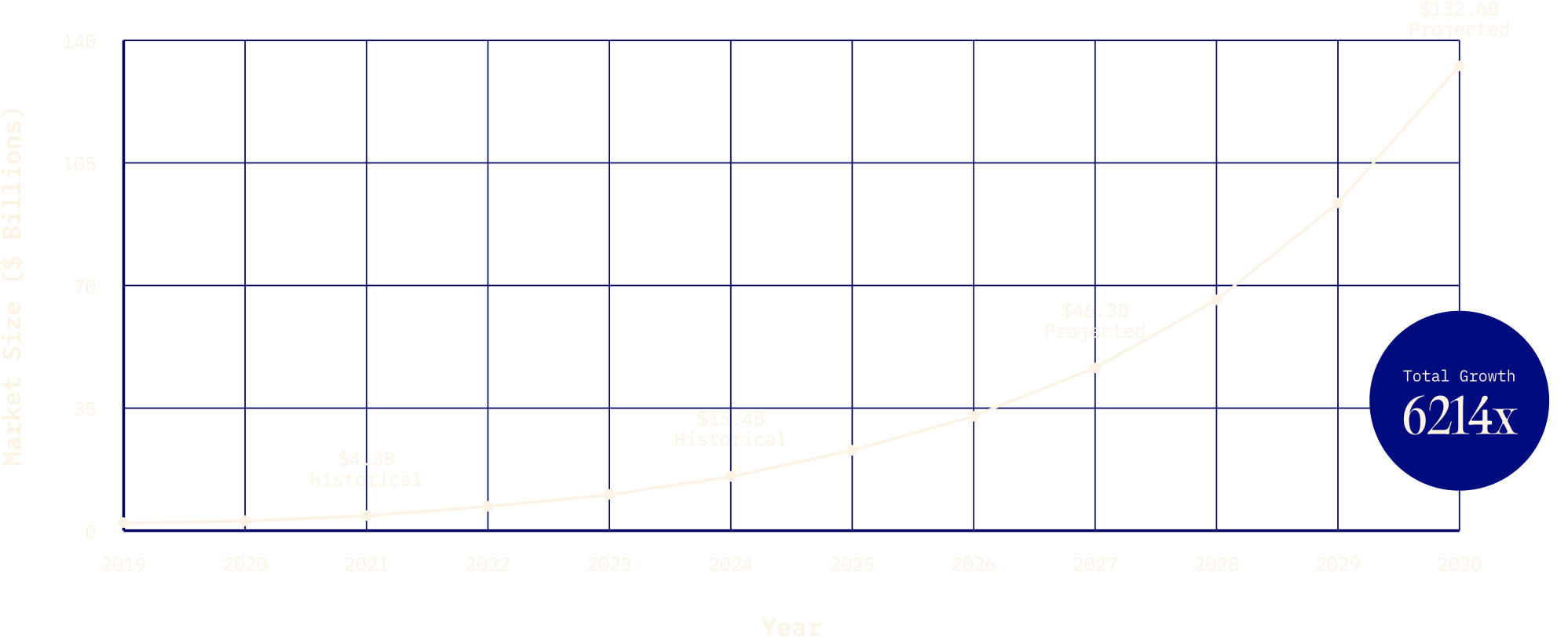
Market Size Growth 2019→2030
Category growth accelerates once infrastructure forms. Life AI sits beneath the growth curve, not inside the application race.
Current scale
Proven by




Blink, And You'll Miss It.

The entry window is open, but healthcare infrastructure doesn't wait for consensus. The Biohub is forming, and early capital shapes the layer where value compounds for the next decade.